
CEMEX, Sandia Labs, and Synhelion to scale solar energy technology to produce cement
CEMEX, S.A.B. de C.V. (“CEMEX”) announced today that the U.S. Department of Energy awarded US$3.2 million to Solar MEAD, a joint project headed by CEMEX, Sandia National Laboratories, and Synhelion, which aims to decarbonize cement production.
Solar MEAD aims to replace the use of fossil fuels with concentrated solar thermal (“CST”) energy in clinker production, the key component in cement. CEMEX and Synhelion have been collaborating to introduce CST in the cement production process, achieving the first successful laboratory-scale demonstrative pilot in 2022 by producing the first-ever solar clinker. Sandia Laboratories will contribute unique research facilities as part of the National Solar Thermal Test Facility, and subject matter expertise to help accelerate the adaptation of the technology to cement manufacturing.
Synhelion’s breakthrough technology delivers high-temperature process heat beyond 1,500 degrees Celsius – sufficient heat to produce clinker without using fossil fuels.
“Cement produced with solar energy is an exciting technology with tremendous potential to reduce the carbon footprint of cement production,” said Fernando A. González, CEO of CEMEX. “Achieving our net zero carbon goal by 2050 will require relentless innovation such as this to discover and scale breakthrough technologies.”
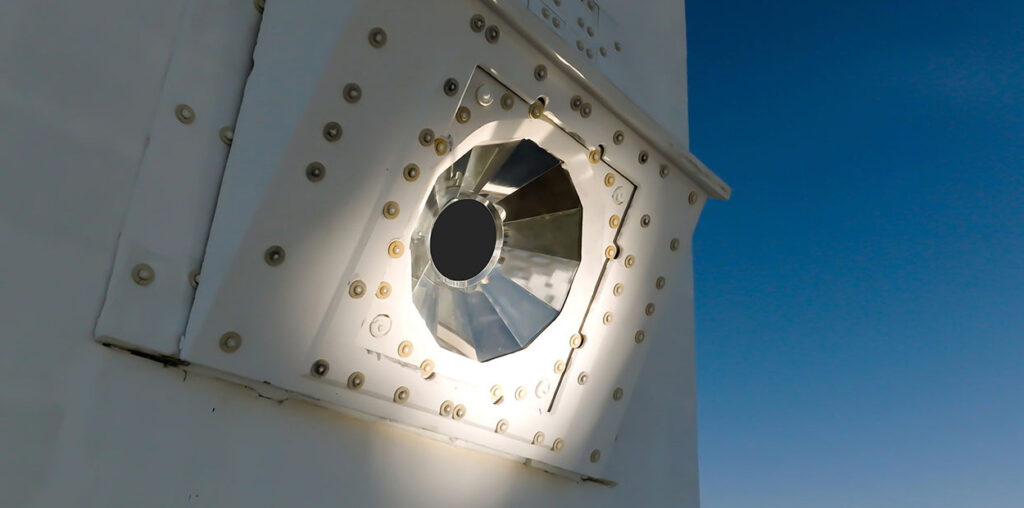
“Few renewable technologies are capable of generating heat at the temperatures needed to process raw cement feedstock,” said Nathan Schroeder, Sandia researcher and principal investigator for the Solar MEAD project. “This project will advance our understanding of how to use concentrating solar technology to gather and deliver the heat to existing cement production facilities and will have crosscutting relevance to other ore processing industries such as refractory, ceramics, and battery production.”
Gianluca Ambrosetti, CEO and Co-Founder of Synhelion, added: “The project offers us the opportunity to use our sustainable technology to support the decarbonization of energy-intensive cement clinker production. This solution can have a huge impact on the industry and will help to pave the way towards net-zero. We are proud of contributing to this goal.”
The project will investigate methods to reduce carbon dioxide emissions, lower process temperatures, and increase the efficiency of clinker formation using solar energy. The team will assess the conditions to maximize heat transfer to the raw cement mix.
Successful adoption of this technology in cement manufacturing will not only allow for 100% replacement of fossil fuels but also result in a more efficient and lower-cost carbon capture process when compared to the current state-of-the-art technologies.
Clinker is produced by fusing limestone, clay, and other materials in a rotary kiln at temperatures nearing 1,500°C. Fossil fuels are typically used to heat the kiln and are responsible for approximately 40% of the direct CO2 emissions of the process. Replacing fossil fuels entirely with solar energy is a game-changer in the industry’s efforts to achieve carbon neutrality.
About Sandia National Laboratories
Sandia National Laboratories is a multimission laboratory operated by National Technology and Engineering Solutions of Sandia LLC, a wholly owned subsidiary of Honeywell International Inc., for the U.S. Department of Energy’s National Nuclear Security Administration. Sandia Labs has major research and development responsibilities in nuclear deterrence, global security, defense, energy technologies and economic competitiveness, with main facilities in Albuquerque, New Mexico, and Livermore, California.
About Synhelion
Synhelion is a global pioneer in the field of carbon-neutral solar fuels. The clean energy company evolved from the Swiss Federal Institute of Technology (ETH Zurich) in 2016 to decarbonize the transportation sector. Synhelion is currently building its first industrial solar fuel plant in Germany. The first commercial production facility is planned for commissioning in Spain by 2025. Synhelion is the first company to sustainably generate process heat beyond 1,500°C with concentrated solar radiation. This makes it possible to drive industrial processes such as fuel production and cement manufacturing with solar heat for the first time. The company provides the world with cutting-edge technology to help solve the climate crisis and works with international partners such as Eni, CEMEX, Lufthansa Group, Swiss International Air Lines, SMS group, Wood, AMAG Group, and Zurich Airport. For more information, please visit: synhelion.com
About CEMEX
CEMEX (NYSE: CX) is a global construction materials company that is building a better future through sustainable products and solutions. CEMEX is committed to achieving carbon neutrality through relentless innovation and industry-leading research and development. CEMEX is at the forefront of the circular economy in the construction value chain and is pioneering ways to increase the use of waste and residues as alternative raw materials and fuels in its operations with the use of new technologies. CEMEX offers cement, ready-mix concrete, aggregates, and urbanization solutions in growing markets around the world, powered by a multinational workforce focused on providing a superior customer experience, enabled by digital technologies. For more information, please visit: www.cemex.com
###
This press release contains forward-looking statements within the meaning of the U.S. federal securities laws. CEMEX intends these forward-looking statements to be covered by the safe harbor provisions for forward-looking statements in the U.S. federal securities laws. These forward-looking statements reflect CEMEX’s current expectations and projections about future events based on CEMEX’s knowledge of present facts and circumstances and assumptions about future events, as well as CEMEX’s current plans based on such facts and circumstances. These statements necessarily involve risks, uncertainties, and assumptions that could cause actual results to differ materially from CEMEX’s expectations, including, among others, risks, uncertainties, and assumptions discussed in CEMEX’s most recent annual report and detailed from time to time in CEMEX’s other filings with the Securities and Exchange Commission, which factors are incorporated herein by reference, which if materialized could ultimately lead to CEMEX, including the project referred herein, not producing the expected benefits and/or results. These factors may be revised or supplemented, but CEMEX is not under and expressly disclaims, any obligation to update or correct this press release or any forward-looking statement contained herein, whether as a result of new information, future events, or otherwise. Any or all of CEMEX’s forward-looking statements may turn out to be inaccurate. Accordingly, undue reliance on forward-looking statements should not be placed, as such forward-looking statements speak only as of the dates on which they are made. The content of this press release is for informational purposes only, and you should not construe any such information or other material as legal, tax, investment, financial, or other advice. CEMEX is not responsible for the content of any third-party website or webpage referenced to or accessible through this press release, nor for any quote from any third-party contained herein.