Category: Blog

  • Industrial boilers: Modernization through a workforce lens   

    Industrial boilers: Modernization through a workforce lens   

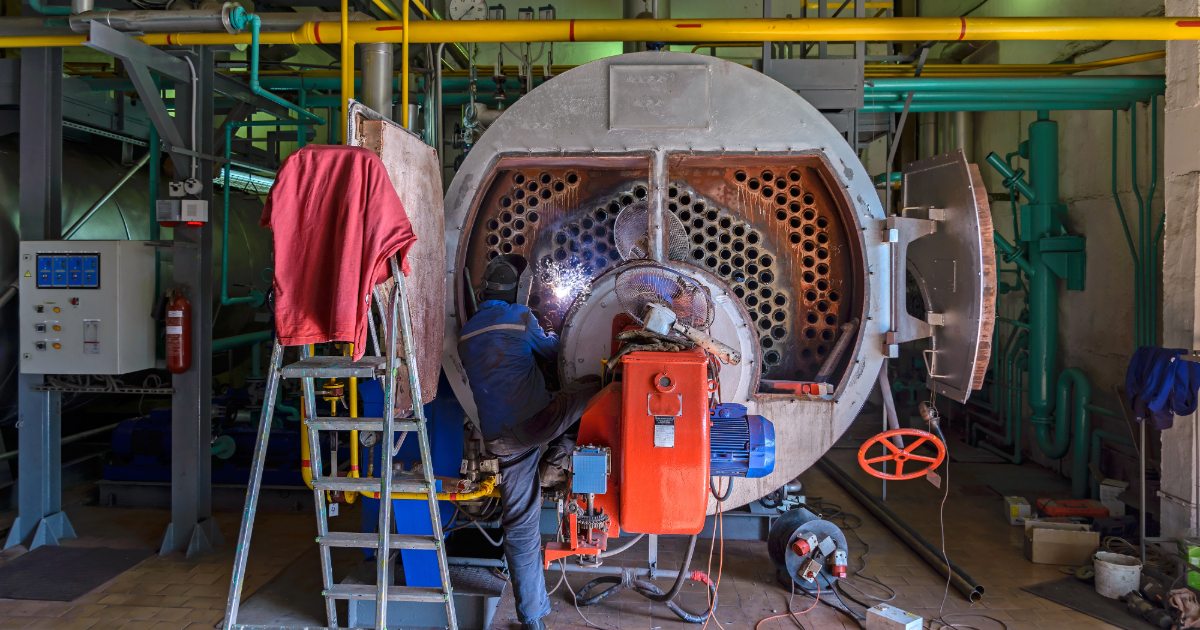
    What powers a significant portion of America’s industrial base, yet goes unnoticed by most people? Meet the industrial boiler. Industrial boilers operate quietly across different types of facilities, supplying the heat that keeps many industrial processes running day after day. They are rarely visible to the public but deeply embedded in the systems that support…

  • Industrial Innovation Initiative Releases 2025 Annual Report

    Industrial Innovation Initiative Releases 2025 Annual Report

    As stated in the opening letter from the Industrial Innovation Initiative’s (I3) Manager, David Soll, “2025 brought many significant changes to US industrial and energy policy, making it more critical than ever for our members and participants to come together and advance industrial innovation.” In 2025, the Initiative continued to support policy development and implementation,…

  • State of Play: Iron and Steel

    State of Play: Iron and Steel

    The Industrial Innovation Initiative’s October 2025 plenary featured leaders from the iron and steel sector, who shared valuable insights on progress, challenges, and opportunities. Steel is essential to United States (US) national economic security. It is the backbone of critical infrastructure, supporting nearly two million American jobs directly and indirectly. As the most easily recycled…

  • State of Play: Biofuels

    State of Play: Biofuels

    The Industrial Innovation Initiative’s September 2025 plenary featured the Renewable Fuels Association (RFA), a national leader in advancing sustainable, renewable fuels and bioproducts since 1981. Headquartered in St. Louis, RFA represents a broad network of US ethanol producers, from small cooperatives to corporate models, from coast to coast. Thank you to RFA for sharing these valuable…

  • Honoring the Workforce Driving Industrial Innovation

    Honoring the Workforce Driving Industrial Innovation

    This Labor Day, the Industrial Innovation Initiative (I3) proudly recognizes the essential role of the American workforce in advancing industrial innovation. From improving energy efficiency and upgrading industrial heat systems to deploying carbon management technology and building hydrogen and other pipeline infrastructure, skilled labor ensures complex projects meet the highest safety standards while delivering real…

  • Lessons from an Industrial Innovation Summer Internship 

    Lessons from an Industrial Innovation Summer Internship 

    Author: Riley Stern This summer, I joined the Great Plains Institute’s Industrial Innovation and Carbon Management team as an intern through the University of Minnesota’s Sustainability Corps program. During this time, I worked to compile research and data surrounding the decarbonization of industrial heat processes in Minnesota and across the United States.   A focus…

  • State of Play: Cement and Concrete

    State of Play: Cement and Concrete

    How Industry Collaboration and Innovation Are Shaping The Future of Cement and Concrete This Industrial Innovation Initiative’s July 2025 plenary brought together leaders from the cement and concrete sector to share valuable insights on their work. While recent policy shifts, like the rollback of critical clean energy tax credits and cancellation of key US Department…

  • Clinker: How Changing One Ingredient Can Have a Big Impact

    Clinker: How Changing One Ingredient Can Have a Big Impact

    Clinker, produced by heating a limestone mixture to over 2,500 degrees, is the essential ingredient in cement, which is the primary ingredient in concrete, the world’s most human-made material. Traditional clinker production generates 90 percent of the emissions associated with cement. Below are a few examples of ways to address this challenge. Reducing or replacing…

  • How States Can Transform Cement and Concrete Production

    How States Can Transform Cement and Concrete Production

    Cement and concrete are foundational to our modern world. They are also a significant source of carbon emissions. Cement, the key ingredient in concrete, makes up about seven to eight percent of global carbon dioxide emissions. If the cement industry were a country, it would be the third-largest source of emissions behind China and the…

  • Event Recap: GCCA Circular Cities Policy Summit

    Event Recap: GCCA Circular Cities Policy Summit

    Author: Alana Hadland, I3 Program Associate I recently attended the Global Cement and Concrete Association’s Circular Cities Policy Summit in Mexico City. The event brought together global leaders and stakeholders from the cement and concrete industry, academia, non-profits, and more to showcase circularity and policy partnership. Concrete is the most widely used human-made material on…

Labor Engagement Manager for Industrial Innovation and Carbon Management, GPI

Alejandro comes to GPI from Labor Union SEIU-United Service Workers West. He represented union workers from downtown Los Angeles and LA’s westside corridor of Century City, Westwood, and Beverly Hills. Alejandro enforced various collective bargaining agreements for union workers, ensuring annual wage increases, health insurance, and other benefits and protections. In addition, he worked with union leaders and outside stakeholders, such as community partners, public agencies, politicians, and industry experts, to develop and execute union campaigns. Alejandro was also part of the Los Angeles-Justice for Janitors 2021 union contract campaign—he helped execute and coordinate large-scale actions across LA’s metropolitan area. Previously, he served as the Nevada state canvassing director at For Our Future Action Fund. He holds a BA in international studies and Italian from the University of Kansas.

Senior Program Coordinator for Industrial Innovation and Carbon Management, GPI

Carrie Danner joined the Great Plains Institute in 2023 and serves as the operations coordinator for the Industrial Innovation and Carbon Management team. In her work, she supports all projects within the program to elevate operations, particularly in grant-making and event planning. Carrie earned a bachelor’s degree from Knox College in environmental studies. Prior to joining GPI, she supported programs at the Conservation Corps of Minnesota & Iowa as their member experience administrator.

Industry Program Coordinator, GPI

Alana joined GPI in 2024 as a program associate on the Industrial Innovation and Carbon Management team, specifically supporting the Industrial Innovation Initiative, where she helps to advance industrial decarbonization through GPI’s consensus-building approach. Alana previously worked as an account executive at Jamf, where she helped current K-12 education customers improve and scale the management and security of their Apple device deployments. Alana has spent most of her professional years working with Minnesota nonprofits, including two years as an AmeriCorps member with Twin Cities Habitat for Humanity. She holds a bachelor’s degree in community environmental studies from the University of Wisconsin-Eau Claire.

Zachary Byrum, Research Analyst, WRI

Zachary Byrum is a Research Analyst in WRI's U.S. Climate Program, where he provides technology and policy analysis for carbon removal and deep decarbonization. His work focuses on pathways to reduce industrial emissions as well as bolstering technological carbon removal. Prior to WRI, Zach was a research assistant in the Carbon Management Research Initiative at the Center on Global Energy Policy. In the preceding years, he served as White House Intern in the National Economic Council under the Obama Administration and then an assistant analyst at the Congressional Budget Office. Zach holds a Master of Public Administration in Environmental Science and Policy from the School of International and Public Affairs at Columbia University and a B.A. in Economics and Political Science from Goucher College.

Senior Advisor of Industrial Innovation, WRI United States

Angela Anderson is the Director of Industrial Innovation and Carbon Removal in the Climate Program. She leads WRI's growing portfolio of work in industrial decarbonization and carbon removal and aims to change narratives around “hard-to-abate” sectors and promote the natural and technological interventions required to achieve net-zero targets. Prior to joining WRI, Angela worked as a program director, coalition builder, international advocate, and campaign strategist. She led the Climate and Energy Program at the Union of Concerned Scientists for ten years; facilitated US-NGO engagement in the international climate negotiations while at US Climate Action Network and at the Pew Environmental Trust; and founded Clear the Air, a national coalition to reduce pollution from power plants. Angela holds a B.A. in political science from Colorado State University.

Vice President of Industrial Innovation and Carbon Management, GPI

Patrice Lahlum is the Vice President of the Industrial Innovation and Carbon Management program at the Great Plains Institute. The Institute, headquartered in Minneapolis, MN, works with diverse stakeholders and communities across the country to transform the energy system to benefit people, the economy, and the environment. We strive to combine our unique consensus-building approach, expert knowledge and analysis, and local action to promote solutions that strengthen communities, shore up the nation’s industrial base, and enhance domestic energy independence, all while eliminating carbon emissions. Patrice oversees several initiatives, including the Carbon Capture Coalition, Industrial Innovation Initiative, Carbon Action Alliance, and the Regional Carbon Capture Deployment Initiative.

Senior Content Specialist for Industrial Innovation and Carbon Management, GPI

Kate Sullivan joined the Great Plains Institute in 2019. As Senior Content Specialist, Kate uses her analytical and design skills to provide research, writing, and logistical support across the Industrial Innovation and Carbon Management team. Prior to joining GPI, Kate worked as an Energy Counselor in the Center for Energy and Environment’s residential department, assisting homeowners with their energy needs and providing resources for efficiency upgrades. Kate earned her BA in Biology from St. Olaf College with an emphasis in Environmental Studies.

Senior Program Manager for Industrial Innovation and Carbon Management, GPI

Jill Syvrud joined the Great Plains Institute in 2017 and serves as the program manager for the Industrial Innovation and Carbon Management Program. In addition to overseeing the overall program, Jill directly supports the Industrial Innovation Initiative, a coalition advancing decarbonization solutions for the Midcontinent region’s most important industrial sectors. Jill earned a bachelor of science in biology from the University of Wisconsin–Eau Claire and a master of science degree in science technology and environmental policy from the University of Minnesota’s Humphrey School of Public Affairs. Jill’s past experience includes multiple graduate research assistantships concentrating on technology innovation and sustainable megacities, as well as a previous position as an administrative and outreach coordination intern with the Midwest Renewable Energy Association.